
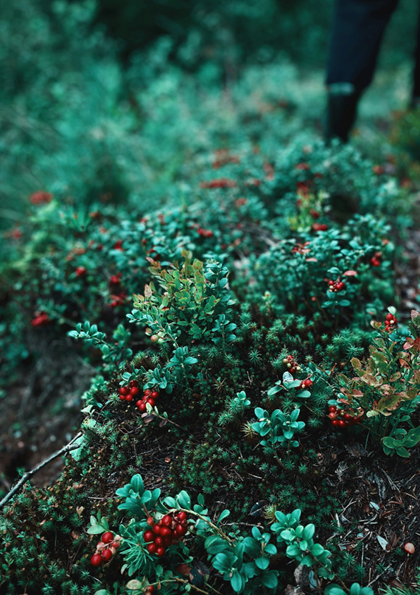
Growth habit: Evergreen dwarf shrub, woody shoots, strongly branched
Height: 10 to 30 cm, carpet-like growth, forms dense stands
Lifespan: Several decades possible
Leaves: Leathery, glossy dark green on top, light-colored with dot-shaped glands underneath, oval, 1-3 cm long
Flower: Hermaphrodite, bell-shaped, white to pale pink, in small, racemose umbels
Flowering time: May to June
Fruit: Red, shiny berries (botanically: pseudo-fruits), round, sour-tart in taste
Ripening: August to September
Habitat: Prefers sunny to semi-shady locations, on acidic, nutrient-poor, sandy to boggy soils
Occurrence: Widespread in Northern Europe, Siberia, North Asia and North America; in Germany mainly in raised bogs, sparse pine forests, heaths and mountains
Medicinal use: Has an antibacterial, diuretic, anti-inflammatory, antioxidant effect Supports bladder inflammation, kidney problems, gastrointestinal disorders and rheumatism
Ingredients: Arbutin, tannins, flavonoids, organic acids, vitamin C
Uses:
- Internally: As a tea made from the leaves for urinary tract infections, cranberry juice to prevent cystitis
- External: Rarely; extracts from leaves in natural cosmetics (e.g. for blemished skin)
Special features: The leaves contain arbutin, which is converted to hydroquinone in the body - this has a strong antibacterial effect in the urinary tract. Cranberries are considered a traditional household remedy for urinary tract infections and to strengthen the immune system in winter.
Side effects: Excessive intake (especially of leaf tea) can cause stomach irritation. Not suitable for pregnant women in high doses (due to arbutin).
Interesting facts: In Nordic folk medicine, lingonberries are considered a "gift from the gods " - they were traditionally used to preserve game dishes. In modern cuisine, it is popular as an accompaniment to game, cheese or as a jam.
Ecological importance: Important late summer food for wild animals such as capercaillie, black grouse and various small mammals. The flowers are visited by wild bees and bumblebees, the berries are spread by birds. The plant stabilizes nutrient-poor, sandy forest soils with its root runners.